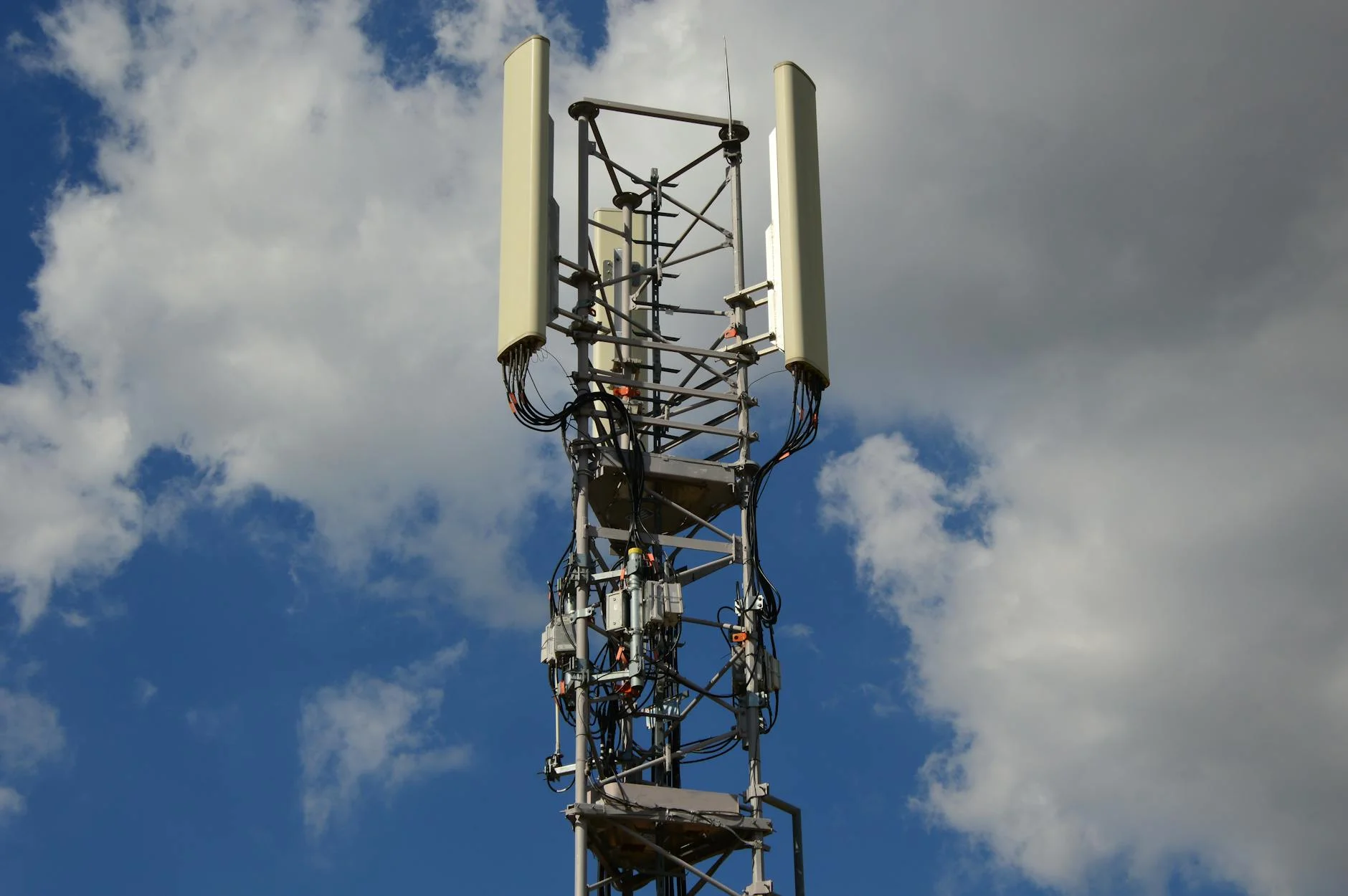
5G in France: Coverage, Plans & Prices 2026
Everything you need to know about 5G in France: operator coverage maps, current plan prices, the year-2 price trap that operators don't advertise, eSIM setup for expats, and real-world speed data.
Key takeaways — what to remember
- •5G covers ~75% of the population across 8,500+ municipalities — best in Paris, Lyon, Marseille, Toulouse
- •Watch the year-2 price jump! Promo rates jump 5-15€/month after 12 months — check the fine print
- •Coverage leader: Orange 78%, Free 76%, Bouygues 74%, SFR 72%
- •3.5 GHz (band n78) is the sweet spot — best speed-coverage balance in France
- •eSIM works on all French operators — great for expats, no physical SIM needed
- •No health risk confirmed — ANSES and WHO both report no established danger from current 5G levels
Table of Contents
1. What is 5G and How Does It Differ from 4G?
5G (fifth generation of mobile networks) is the new wireless standard that replaces 4G. Let me be straight about something: those ads claiming "20 Gbps max speed" don't reflect real-world performance. But the difference from 4G is genuine — in speed, responsiveness, and capacity.
The 3 Pillars of 5G
- eMBB (Enhanced Mobile Broadband): faster data for video, large files, streaming
- URLLC (Ultra-Reliable Low Latency): gaming, real-time apps, video calls that don't freeze
- mMTC (Massive Machine Type Communications): IoT devices, smart home, connected sensors
4G vs 5G Comparison
The numbers below are theoretical maximums. In practice, everything depends on the frequency band used, your distance from the antenna, and network congestion at peak hours.
| Feature | 4G LTE | 5G |
|---|---|---|
| Max theoretical speed | 1 Gbps | 20 Gbps |
| Average real speed | 30-100 Mbps | 200-500 Mbps |
| Latency | 30-50 ms | 1-10 ms |
| Devices per km² | 100,000 | 1,000,000 |
Sources: ARCEP 5G observatory 2025-2026, nPerf network measurements
2. 5G Deployment Status in France
Commercial 5G deployment in France began on November 18, 2020. The four major operators (Orange, SFR, Bouygues Telecom, Free) rolled out their networks progressively. Here's where things stand as of April 2026:
5G Deployment Numbers (April 2026)
45,000+
Active 5G antennas
Source: ARCEP
~75%
Population covered
Major urban areas
8,500+
Municipalities equipped
Municipality-level data
4
Major operators
+ MVNOs
5G Frequency Bands in France
ARCEP (French telecom regulator) has allocated three main frequency bands for 5G. Each has distinct advantages and trade-offs:
700 MHz
Widest coverage, rural-friendly
Speed: 50-150 Mbps
Good indoor penetration, lower speeds
3.5 GHz (n78)
Best balance — coverage + speed
Speed: 200-700 Mbps
Watch out for imported phones missing this band
26 GHz (mmWave)
Very high speed, short range
Speed: 1-3 Gbps theoretical
Only in dense urban areas, not widespread yet
3. Coverage by Operator
Each operator deploys 5G according to its own strategy. Here's the coverage breakdown as of April 2026, based on ARCEP data:
Orange
Historic market leader
5G Antenna Sites
~12,000
Population Coverage
~78%
Frequencies Used
700 MHz, 3.5 GHz
Free Mobile
Iliad Group — aggressive pricing
5G Antenna Sites
~11,500
Population Coverage
~76%
Frequencies Used
700 MHz, 3.5 GHz
Bouygues Telecom
Bouygues Group
5G Antenna Sites
~11,000
Population Coverage
~74%
Frequencies Used
700 MHz, 3.5 GHz
SFR
Altice Group
5G Antenna Sites
~10,500
Population Coverage
~72%
Frequencies Used
700 MHz, 3.5 GHz
How to check 5G coverage at your address
Don't trust operator marketing — check the official ARCEP coverage map at monreseaumobile.arcep.fr for address-level signal data. Or use each operator's website coverage checker before committing.
4. 5G Plans and Pricing
All four major French operators now offer 5G plans, plus MVNOs (low-cost brands). Here's what you'll find on the market:
Budget 5G Plans (MVNOs and Sub-brands)
| Operator | Plan Name | 5G Data | Year 1 Price | Year 2 Price |
|---|---|---|---|---|
| Free Mobile | Forfait Free 5G | 300 GB | €19.99 | €29.99 |
| B&You (Bouygues) | 5G Special Series | 200 GB | €24.99 | €39.99 |
| RED by SFR | 5G Plan | 200 GB | €25.99 | €35.99 |
| Sosh (Orange) | 5G Plan | 140 GB | €24.99 | €34.99 |
Premium Plans
| Operator | Plan Name | 5G Data | Year 1 Price | Year 2 Price |
|---|---|---|---|---|
| Orange | 5G Max | Unlimited | €64.99 | €79.99 |
| SFR | 5G Premium | Unlimited | €65.00 | €79.00 |
| Bouygues | Sensation 5G | 200 GB | €54.99 | €69.99 |
Prices shown as of April 2026. Year-2 prices are the standard renewal rates after the first 12-month promo period ends. Source: operator websites, ARCEP price observatory.
5. Year-2 Price Jump — The Trap Operators Don't Tell You
This is the most important thing to understand before signing up
French operators routinely advertise first-year promo prices that look great. But once that 12-month promotional period ends, prices jump — sometimes by €10-15/month. That "amazing deal" suddenly becomes expensive.
Example: A €19.99/month plan often becomes €29.99 or €34.99 in year 2. Over 2 years, you're paying effectively €27.49/month average — not €19.99.
What you should do
Always ask for the "renewal price after promo"
Not just the first-year price. The contract should state the standard rate.
Set a calendar reminder for month 10
Contact your operator or switch before the promo period ends to avoid the price hike.
Use comparison tools — promo prices make misleading headlines
When a plan shows "from €19.99", check the fine print: what does it cost in month 13?
For expats: timing matters
If you're new to France, be aware that many operators require French ID and a French bank account (RIB). eSIM-compatible MVNOs like Free, RED, and Sosh are often the easiest to set up remotely. You can switch operators at any time after the minimum commitment period (usually 12 months).
6. Device Compatibility and eSIM
To use 5G, you need a 5G-compatible smartphone. Here's what you need to know:
Popular 5G-Compatible Smartphones
Apple
- iPhone 16 / 16 Pro / 16 Pro Max
- iPhone 15 / 15 Pro / 15 Pro Max
- iPhone 14 / 14 Pro / 14 Pro Max
- iPhone 13 / 13 Pro / 13 mini
- iPhone 12 (entire range)
- iPhone SE (2022 and later)
Samsung
- Galaxy S25 / S25+ / S25 Ultra
- Galaxy S24 / S24+ / S24 Ultra
- Galaxy S23 (entire range)
- Galaxy Z Fold 5 / Z Flip 5 and later
- Galaxy A54 5G, A55 5G
- Galaxy A34 5G, A35 5G
eSIM in France
eSIM is fully supported by all French operators and is especially useful for expats. Here's why:
eSIM Advantages
- • Activate remotely — no shop visit needed
- • Set up in minutes, not days
- • Switch operators without waiting for mail
- • Dual-SIM: keep home country number + French plan
- • No physical SIM to lose or damage
Things to Check
- • Phone must support eSIM (most 2021+ do)
- • Band n78 support (for full French 5G)
- • Some MVNOs have limited eSIM options
- • QR code activation needs camera access
Watch out for imported phones
If you buy a smartphone abroad, check that it supports the French 5G band n78 (3.5 GHz). Some models sold in the US or Asia don't include n78, which means you'll get significantly slower speeds or fall back to 4G in France. When in doubt, check the manufacturer's frequency compatibility chart.
7. Performance and Real Speeds
Real 5G speeds depend heavily on the frequency band, your distance from the antenna, and network congestion at peak times. Here's what you can actually expect:
Average 5G Speeds in France (2025-2026 data from nPerf)
5G NSA vs SA: What it means for you
Most French 5G currently runs on NSA (Non-Standalone) — it uses 4G infrastructure as its backbone. SA (Standalone) runs on a pure 5G core and offers genuinely lower latency and better capacity, especially in crowded areas. The SA rollout is accelerating through 2026-2027, which should make the experience noticeably better over time.
8. 5G and Health: What Science Says
This is probably the question I get asked most often. Here's a straightforward answer based on what French and international health authorities actually say:
ANSES Position (2021, updated 2024)
- Current scientific data shows no proven health risk from 5G at current exposure levels
- Exposure levels remain well below regulatory limits set by ICNIRP
- ANSES recommends continued monitoring, especially for the 26 GHz band (not yet widely deployed)
- Epidemiological monitoring continues across France and Europe
WHO Position
The World Health Organization confirms that after decades of research, no adverse health effects have been established for exposure to radio waves below the recommended ICNIRP limits.
Exposure limits in France
France applies ICNIRP recommendations with limits of 61 V/m for 3.5 GHz frequencies. These limits include significant safety margins. ANFR performs regular measurements across the territory to verify compliance. You can check real-time exposure data at specific locations on the ANFR website.
9. What is 5G Actually Good For?
5G isn't just about faster downloads — it enables new use cases that weren't practical with 4G:
For Consumers
- • 4K/8K video streaming on the go — no buffering in most areas
- • Cloud gaming with console-quality latency (xCloud, GeForce Now)
- • Fast downloads: a movie in under a minute in good coverage
- • Augmented and virtual reality (AR/VR) that actually works
- • Stable video calls even in crowded places (concerts, stations)
For Business and Industry
- • Connected factories and predictive maintenance
- • Real-time remote operations and logistics tracking
- • Smart city infrastructure (traffic, utilities, sensors)
- • Telemedicine with real-time high-resolution imaging
- • Connected vehicles and autonomous transport pilots
For expats: the practical benefit
If you regularly call family abroad via WhatsApp, FaceTime, or Skype, 5G's lower latency makes a real difference — calls stay stable even when you're moving through the city. For remote work with video conferencing, cloud desktop, or large file transfers, the speed advantage over 4G is noticeable and genuinely useful.
10. Notes for Expats Living in France
Setting up a phone plan in France as a foreigner involves a few specific considerations that residents from other countries might not expect:
Documents you'll typically need
- Valid passport or French ID card (carte nationale d'identité)
- Proof of address in France (electricity bill, rental contract, or attestation d'hébergement)
- French bank account (RIB) — required by most operators for direct debit
- Some operators may accept a foreign passport + proof of address, but it's variable
eSIM is your friend
If you have a phone that supports eSIM, you can often activate a plan remotely before you even have a French bank account set up. Free Mobile, RED, and Sosh all support eSIM activation with a foreign credit card in some cases. This means you can have a working French number on arrival rather than waiting days for a physical SIM.
Roaming and international calling
Within the EU, your French plan works for roaming at no extra cost. But if you're calling non-EU countries (US, UK, Turkey, etc.), check international add-on options — some operators charge significantly for calls outside the EU zone.
Switching operators after the minimum term
French contracts typically have a 12-month minimum commitment. After that, you can switch at any time with 30 days notice. Use that freedom — don't assume your current operator will give you the best rate in year 2. Shopping around at month 10-11 has saved many expats significant money.
Related reading
If you're setting up French infrastructure, also see our guides on keeping your number when switching operators and comparing home internet boxes. For 5G specifically, the ARCEP coverage map is the single most useful tool before signing any contract.
11. Frequently Asked Questions
Where is 5G available in France?
As of 2026, 5G covers approximately 75% of the French population across 8,500+ municipalities. Coverage is best in major cities (Paris, Lyon, Marseille, Toulouse, Nice, Nantes, Lille, Strasbourg, Bordeaux). Rural deployment continues but at a slower pace. Check ARCEP's official coverage map (monreseaumobile.arcep.fr) for address-level detail.
How much do 5G plans cost in France? Is there a year-2 price jump?
Budget 5G plans start at €15-20/month. But most operators advertise first-year promo prices that jump significantly in year 2. A €19.99/month plan can become €29.99 or €34.99 after 12 months. Always check the "renewal price" in the fine print before signing.
Do I need a new phone for 5G?
Yes, you need a 5G-compatible smartphone. Most models released since 2021 support 5G (iPhone 12 and later, Samsung Galaxy S21 and later). If you buy a phone from abroad, make sure it supports band n78 (3.5 GHz) — the main French 5G frequency. Some imported models don't work properly on French networks.
Is 5G dangerous for health?
ANSES (French health agency) and WHO both state that current scientific evidence shows no proven health risk from 5G. Exposure levels stay well below regulatory limits. ANSES recommends continued monitoring, especially for the 26 GHz band, but no dangerous threshold has been reached.
What's the difference between 5G and 4G?
5G is roughly 10x faster than 4G in real-world use (200-500 Mbps average vs 30-100 Mbps). Latency drops from 30-50ms to 1-10ms. And 5G can handle 10x more devices per square kilometer — which matters in crowded urban areas or at events.
Does eSIM work in France?
Yes. eSIM is fully supported by all French operators — Orange, SFR, Bouygues, Free, and MVNOs like B&You, RED, and Sosh. For expats, eSIM is especially convenient: you can activate it remotely without waiting for a physical SIM to arrive by mail.
What's the difference between 5G frequency bands?
700 MHz gives the widest coverage but lower speeds (50-150 Mbps). The 3.5 GHz band (n78) offers the best balance — good coverage with 200-700 Mbps speeds. The 26 GHz mmWave band delivers top speeds (1-3 Gbps) but only works in very dense urban areas with very short range.
Which operator has the best 5G coverage?
ARCEP data for 2025-2026: Orange leads with 78% population coverage, followed by Free (76%), Bouygues (74%), and SFR (72%). For actual speeds, all operators perform similarly on the 3.5 GHz band. Check the coverage map for your specific address, not just the headline stats.
Can I use 5G as home internet instead of fiber?
5G Home (fixed wireless access) is a viable alternative in areas without fiber. Speeds range from 50-500 Mbps depending on signal strength and congestion. Some operators offer dedicated FWA plans. Heavy usage may trigger throttling, and signal quality varies significantly by building type and floor level.
Is 5G worth it for expats living in France?
If you regularly video-call abroad (WhatsApp, FaceTime, Skype), 5G's lower latency makes a noticeable difference — calls stay stable even when moving through the city. For streaming, cloud gaming, or remote work, the speed advantage is real. eSIM makes switching operators quick, which is useful if you're still establishing French residency.
What's the difference between 5G NSA and SA?
NSA (Non-Standalone) uses 4G as its backbone — faster to deploy but has limitations. SA (Standalone) runs on a pure 5G core network, offering lower latency and better capacity. Most French operators currently use NSA; SA rollout is accelerating through 2026-2027.
Can I use my French 5G plan abroad (roaming)?
Your French 5G plan works for roaming within the EU at no extra cost under EU regulations. But check your operator's fair use policy — some budget plans limit roaming data. Also watch for the year-2 price increase applying to the entire package, roaming included.
Official Sources
Related Articles
Mobile Number Portability in France
How to keep your number when switching operators — step by step.
Internet Box Comparison in France
Fiber, DSL, 5G Home — finding the best home internet option for your address.
How to Choose a Mobile Plan in France
A comprehensive guide to finding the right mobile plan for your usage patterns.
Fransa 5G Kapsama ve Tarifeler (Türkçe)
Türkçe rehber: Fransa'da 5G kapsama, tarifeler ve yıl 2 fiyat uyarısı.
Disclaimer
The information in this article was verified in April 2026. Plan prices, coverage, and regulations may change. Always check the official operator websites and ARCEP for the most current information before making decisions. Comparatif24.fr is an independent information site, not affiliated with any operator.