Heat Pump in France 2026: MaPrimeRenov, RGE Rule and Expat Guide
MaPrimeRenov amounts checked on Service-Public, the RGE installer rule and how to compare quotes. Written for homeowners and expats heating a French home.
Key Takeaways
- A heat pump delivers more heat than the electricity it consumes: that ratio is the COP (coefficient of performance).
- Three families: air-to-air, air-to-water and geothermal. Compare three written quotes from RGE installers.
- MaPrimeRenov par geste: 5,000 / 4,000 / 3,000 EUR for air/water and 11,000 / 9,000 / 6,000 EUR for geothermal (Blue / Yellow / Violet, Service-Public F35083).
- An RGE professional must carry out the works, visit the site before them, and works can start only after Anah acknowledges your application.
1. What is a Heat Pump?
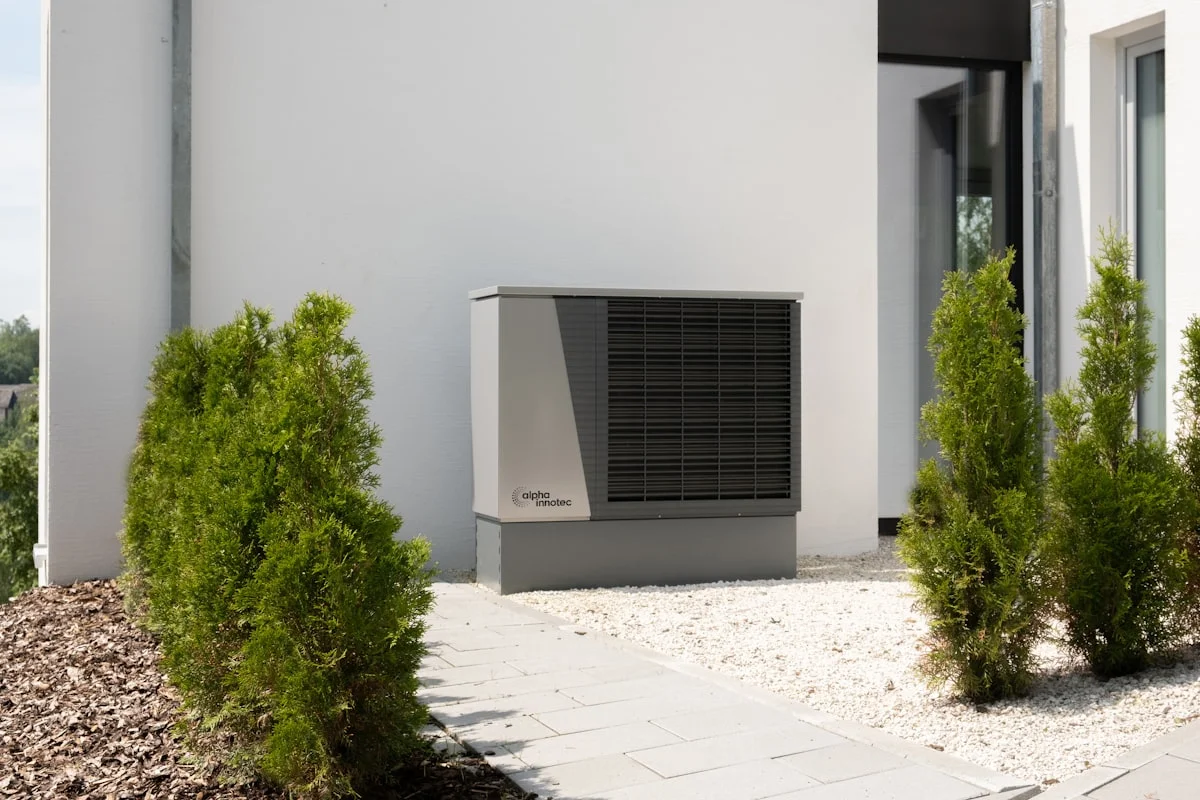
A heat pump (pompe à chaleur or PAC in French) captures heat from the environment (outdoor air, water, ground) and transfers it inside the home. A reversible model can also cool the home.
COP Principle (Coefficient of Performance)
COP measures heat pump efficiency: it is the ratio between the useful heat delivered and the electricity consumed.
= useful heat delivered ÷ electricity consumed
To compare seasonal performance, look at SCOP (section 7). To shave the bill further, see off-peak hours and the Tempo EDF tariff.
2. The Three Heat Pump Types
Air-to-Air Heat Pump (Reversible AC)
Captures heat from outdoor air and delivers it inside through indoor units.
- Not listed on the Service-Public MaPrimeRenov par geste page
Air-to-Water Heat Pump
Captures heat from outdoor air and transfers it to a water loop. In French the type is called "pompe à chaleur air/eau".
- Listed on the MaPrimeRenov par geste page: 5,000 / 4,000 / 3,000 EUR
Geothermal Heat Pump (Ground-Source)
Captures heat from the ground or from groundwater.
- Listed on the MaPrimeRenov par geste page: 11,000 / 9,000 / 6,000 EUR
Pair the choice with thermal insulation advice and an energy audit, and consider solar self-consumption or a green electricity contract.
3. Prices and Quotes
Installed prices depend on the heat pump type, the home and the installer. This guide quotes no price range: obtain three written quotes from RGE installers and compare them line by line.
Aid example: air-to-water heat pump, Yellow tier
- • MaPrimeRenov par geste, air/water heat pump, Yellow tier: 4,000 EUR, within an expense cap of 12,000 EUR
- • Source: Service-Public F35083, verified 1 September 2026, accessed 2026-10-06
- • Total cost and out-of-pocket amount: they depend on your three RGE quotes
4. 2026 Subsidies and Tax Breaks
According to Service-Public F35083, MaPrimeRenov requires an RGE professional. On the per-item route in mainland France the dwelling must normally be at least 15 years old, reduced to 2 years for an air/water or geothermal heat pump; in the overseas territories it must have been built more than 2 years ago. Service-Public names four income categories (Blue, Yellow, Violet, Rose); the heat pump amounts are listed for Blue, Yellow and Violet.
- • Air/water: 5,000 EUR (Blue), 4,000 EUR (Yellow), 3,000 EUR (Violet), expense cap 12,000 EUR
- • Geothermal: 11,000 EUR (Blue), 9,000 EUR (Yellow), 6,000 EUR (Violet), expense cap 18,000 EUR
Source: Service-Public F35083, verified 1 September 2026, accessed 2026-10-06.
Service-Public states that the per-item route can be combined with CEE paid directly by energy suppliers. The amount depends on the offer: ask your installer for a written figure.
Service-Public states that the works also benefit from reduced VAT of 5.5%. Ask your installer to show the VAT rate on the quote.
Service-Public states that the whole-home MaPrimeRenov route can be combined with the éco-PTZ. Ask your bank for the current conditions.
Bottom line: check which schemes you qualify for before signing any quote. See also the thermal insulation and MaPrimeRenov guide.
5. RGE Installer and Site Visit
The RGE label (Reconnu Garant de l'Environnement) identifies certified professionals. Service-Public F35083 states that MaPrimeRenov works must be carried out by an RGE professional.
- The professional who does the work must visit the site beforehand.
- The date of the visit must appear on the quote and on the invoice.
- Works and services can start only after Anah acknowledges receipt of your application.
If in doubt, ask a France Rénov adviser to walk you through the steps.
6. Expat Checklist: Main Residence and Landlords
The rules on the Service-Public page are about the dwelling and its use. Nationality is not mentioned. The points that matter for non-French homeowners:
- Owner-occupants: you must live in the dwelling as your main residence, and the dwelling must be at least 15 years old, or 2 years for an air/water or geothermal heat pump on the per-item route (Service-Public F35083).
- Landlords: the aid is open to landlords, and a rental must be kept for at least 6 years (Service-Public F35083).
- Second homes: the Service-Public page mentions only main residences for owner-occupants, so ask a France Rénov adviser before you plan works on a second home.
- Language: we could not confirm that any installer works in English, so ask for the quote in a language you can read before you sign.
7. How to Choose the Right Unit
1. Map the home's needs
- • Heated surface, ceiling height, insulation level
- • Domestic hot water integrated or separate?
- • Existing water-based heating loop or all-electric?
2. Compare SCOP
- • Ask for the SCOP of each model in heating mode
- • Ask the installer to justify the sizing of the unit
3. Stress-test the quotes
- • Get at least 3 written quotes
- • RGE certificate listed and the site visit date on the quote
- • Warranty for equipment and labour spelled out
- • Ask about the maintenance schedule and its price
Tip: always ask for the SCOP value of the actual model proposed and compare it across the quotes you receive.
8. Common Mistakes to Avoid
- Starting before Anah's acknowledgement. Service-Public states that works can start only after Anah acknowledges receipt of your application.
- Hiring a non-RGE installer. MaPrimeRenov works must be carried out by an RGE professional.
- Skipping the site visit. The visit is required, and its date must be on the quote and the invoice.
- Choosing without an energy audit. Ask what the audit says about your insulation before you pick a unit.
9. Frequently Asked Questions
How much does a heat pump cost in France in 2026?▼
Installed prices depend on the heat pump type, the home and the installer, and no official price list could be confirmed. Obtain three written quotes from RGE installers and compare them line by line.
What MaPrimeRenov amounts apply to a heat pump in 2026?▼
On the per-item route (parcours par geste) in mainland France, for an air/water heat pump: 5,000 EUR (Blue), 4,000 EUR (Yellow) or 3,000 EUR (Violet), within an expense cap of 12,000 EUR. For a geothermal heat pump: 11,000 EUR (Blue), 9,000 EUR (Yellow) or 6,000 EUR (Violet), within an expense cap of 18,000 EUR. Source: Service-Public F35083, verified 1 September 2026, accessed 2026-10-06.
Is RGE certification mandatory for heat pump installers?▼
For MaPrimeRenov, yes: Service-Public states that the works must be carried out by a professional recognised as Reconnu Garant de l’Environnement (RGE). Service-Public also states that this professional must visit the site before the works and that the date of the visit must appear on the quote and on the invoice.
When can the works start?▼
Service-Public states that the works and services can start only after Anah has acknowledged receipt of your application. Do not sign and start before that acknowledgement.
How old must the home be?▼
For the per-item route in mainland France, Service-Public states that the dwelling must normally be at least 15 years old, reduced to 2 years for an air/water or geothermal heat pump. In the overseas territories it must have been built more than 2 years ago.
Can I combine MaPrimeRenov with other aid?▼
Service-Public states that the per-item route can be combined with energy savings certificates (CEE) paid directly by energy suppliers, and that the works also benefit from the reduced 5.5% VAT. It also states that the whole-home route can be combined with the éco-PTZ. Ask your installer and bank for the current conditions.
Are air-to-air heat pumps covered by MaPrimeRenov?▼
On the per-item route, the Service-Public page lists only air/water heat pumps (and geothermal ones), so an air-to-air unit does not appear in that list. Check with a France Rénov adviser before you sign.
What is SCOP and why does it matter?▼
SCOP (Seasonal Coefficient of Performance) measures efficiency over the heating season: heat delivered divided by electricity consumed. Ask for the SCOP of the exact model quoted and compare it across quotes.
Official Sources (accessed October 6, 2026)
Related Articles
Disclaimer: Aid amounts cited come from Service-Public F35083 (verified 1 September 2026, accessed 2026-10-06) and may change. Always request three RGE quotes and consult a France Rénov adviser before committing.