EnergyUpdated 26 May 2026

EDF Regulated Electricity Tariff 2026 (TRV): A Practical Guide for Expats

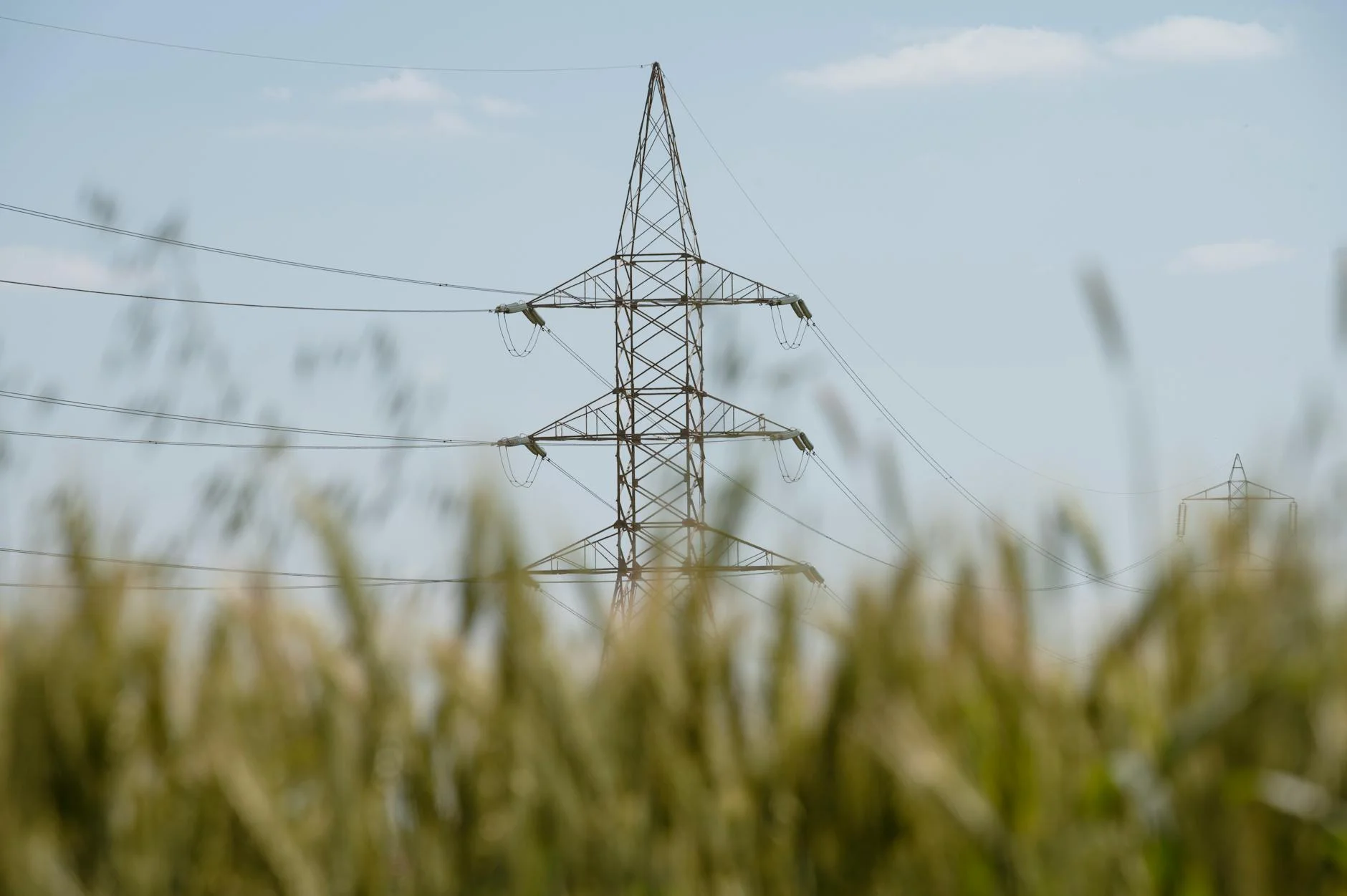
High-voltage power lines of the French electricity grid

France’s regulated electricity sales tariff (TRV), commonly called the Tarif Bleu, is the benchmark price that anchors the entire electricity market. It is set by the French government on a proposal from the energy regulator (CRE) and offered only by EDF and a few local distribution companies. This guide explains how it works, what you pay in February 2026, and how an English-speaking resident can subscribe or return to the TRV without extra cost.

Key Takeaways

  • TRV revised twice a year: 1 February and 1 August, on a CRE proposal.
  • 1 February 2026, Base 9 kVA: 19.27 cents/kWh + 235.92 EUR/year subscription.
  • February 2026 change: -0.24% (CRE, tariff order published in JO).
  • Price shield: fully removed since February 2025.
  • Eligibility: residential and small professional, subscribed power up to 36 kVA.
  • Return to TRV at any time: free, no interruption, no commitment.

Current TRV Prices (1 February 2026)

Base Option (9 kVA)

  • kWh price (incl. tax): 19.27 cents
  • Annual subscription (incl. tax): 235.92 EUR

Peak/Off-Peak (9 kVA)

  • Peak Hours: 20.65 cents/kWh
  • Off-Peak: 15.79 cents/kWh
  • Annual subscription: 235.92 EUR

Source: CRE deliberation and tariff order published in the Journal officiel. Prices include electricity excise duty (30.85 EUR/MWh), the CTA contribution and VAT (5.5% on subscription, 20% on consumption).

1. What is the Regulated Tariff?

The regulated sales tariff (TRV), commercially known as the Tarif Bleu, is an electricity price set by ministerial order on a proposal from the Commission de regulation de l’energie (CRE, France’s independent energy regulator). It is sold only by:

  • EDF (Electricite de France), the historic operator covering roughly 95% of metropolitan France.
  • Local distribution companies (ELD) that were not nationalised in 1946. The main ones are ES Strasbourg, GEG Grenoble, UEM Metz, Soregies Vienne, SICAE northern Paris, Regaz-Bordeaux and around 100 smaller utilities.

Since the NOME Act of 7 December 2010, the TRV has served as the reference benchmark for France’s liberalised market. The vast majority of alternative offers (TotalEnergies, Engie, OHM Energie, Octopus Energy, La Bellenergie, Mint Energie, Vattenfall, ekWateur) are priced as a percentage discount or premium against it.

Who can access the TRV?

The TRV is open to residential customers and small businesses with subscribed power up to 36 kVA. This covers about 99% of French households and almost all very small businesses (shops, artisans, sole practitioners). Above 36 kVA, only market offers are available. The switching process is identical in both directions.

2. How is the TRV Calculated?

Since 2015, the CRE uses a "stacking" method: four cost blocks are added up to produce the pre-tax price, which the government then validates or amends by ministerial order published in the Journal officiel.

Supply costs

Wholesale market purchases (EPEX Spot, EEX futures) plus ARENH historic nuclear allocations up to end-2025, replaced from 2026 by CAPN nuclear allocation contracts under the November 2023 State-EDF agreement.

Network costs (TURPE)

Public network usage tariff set by CRE every four years. Paid to Enedis (low/medium voltage distribution) and RTE (high voltage transport). Roughly 30% of the residential VAT-inclusive kWh price.

Taxes

Electricity excise duty (former TICFE/CSPE) at 30.85 EUR/MWh for households since February 2026; CTA contribution on network charges funding IEG pension scheme; VAT at 5.5% on subscription and CTA, 20% on consumption and excise.

Commercial costs and margin

Customer service, billing, collection, communication, plus a reasonable EDF margin (around 5% of the pre-tax price). CRE ensures this margin does not distort competition with alternative suppliers.

Revision schedule: the TRV is revised on 1 February and 1 August each year, based on observed and projected costs. Exceptional adjustments are possible during major shocks (energy crisis, government decision) but remain rare.

3. TRV Evolution Since 2024

After the 2022-2023 energy crisis peak, the TRV stabilised in mid-2024 as wholesale prices eased and the price shield wound down. Here are the last five revisions.

DateChange (incl. tax)Context
February 2024+9.8%Partial cost pass-through after the price shield was eased.
August 2024‑11.99%Historic decrease: wholesale prices fell sharply as the shield wound down.
February 2025‑15.03%Steep drop linked to easing wholesale prices and the end of the bouclier tarifaire.
August 2025‑1.27%Minor downward adjustment (CRE deliberation, tariff order 25 July 2025).
February 2026‑0.24%Marginal change: stable wholesale market and modest TURPE increase.

Source: CRE deliberations (cre.fr) and tariff orders published in the Journal officiel via Legifrance.

Price shield update: the bouclier tarifaire put in place in late 2021 to cap TRV increases was gradually eased in 2024 (capped at +9.8% instead of +18%) and fully removed on 1 February 2025. The TRV now reflects actual costs in full. See our electricity price shield guide.

4. The Three Tariff Options

The TRV offers three options for different consumption profiles. Since the August 2025 tariff order, the Base option is being phased out for new subscriptions at 9 kVA and above.

Base Option

Single kWh price applied 24 hours a day, regardless of time.

Studios, small flats, low or steady consumption, no electric heating.

Peak / Off-Peak Hours Option

Two prices: eight cheaper off-peak hours per day (typically at night), 16 peak hours.

Households with electric water heater, programmable washing machine, or electric vehicle charged overnight.

Tempo Option

Six different prices based on day color (300 blue days, 43 white days, 22 red days) and peak/off-peak time.

Highly flexible households able to cut consumption sharply on the 22 red days (November to March, excluding weekends and public holidays).

For more detail, see off-peak and peak hours or our Tempo tariff guide.

5. Choosing the Right Meter Power

The subscribed power (in kVA) determines how many appliances you can run simultaneously without tripping the main breaker, and what you pay for the subscription. Nine power levels are available at the TRV.

PowerTypical dwelling
3 kVAStudio up to 30 sq m, gas or collective heating, few appliances.
6 kVAFlat 30-80 sq m without electric heating, or T2-T3 apartment.
9 kVAHome 80-100 sq m with electric heating, or house with pool.
12 kVALarge all-electric house 100-150 sq m or with EV charging.
15-36 kVAHouses over 150 sq m, professional use, pool plus heat pump plus EV.

A power change is processed for free via your supplier (Enedis bills EDF, which folds the cost into the subscription). Downgrading is free; upgrading may incur a technical visit fee.

6. Anatomy of a TRV Bill

A typical TRV bill for a household consuming 4,800 kWh/year on the Base 6 kVA option breaks down as follows:

  • Supply (kWh + EDF margin): about 35% of the VAT-inclusive total.
  • Network (TURPE + subscription): about 30%.
  • Taxes (excise, CTA, VAT): about 35%.

For an annual bill near 1,100 EUR, roughly 380 EUR goes to EDF, 330 EUR to Enedis and RTE for network use, and 390 EUR to the State and the IEG pension fund through taxes. This split explains why the most effective lever to lower your bill is reducing consumption, not just switching suppliers.

7. Practical Notes for Expats and English Speakers

EDF runs an English-speaking phone line at 09 69 32 15 15 (open Monday to Friday, normal-rate call). The standard French line is 3004. The edf.fr website offers a partial English version for new subscriptions.

  • Bill format: the French bill (facture d’electricite) shows the consumption period, the kWh used, the subscription amount, taxes broken down line by line, and the total. The PDL number (14 digits) identifies your meter and is essential for any switch.
  • Direct debit (prelevement automatique): recommended to avoid late fees. Requires a French RIB. Most banks (including online ones like BoursoBank, Hello bank, Revolut’s French IBAN) work fine.
  • Monthly vs bi-monthly billing: you can opt for "mensualisation" with one estimated monthly debit and a yearly reconciliation, or actual bi-monthly billing based on meter readings.
  • Linky smart meter: over 90% of French dwellings now have one. It reports consumption remotely, so no more estimated bills. See our Linky guide.

8. Advantages and Disadvantages

Advantages

  • +Government-controlled price, protected from sudden wholesale market spikes.
  • +Market benchmark: most alternative offers are priced as a percentage of the TRV.
  • +Return at any time, free, no interruption.
  • +No minimum contract term.
  • +Clear, standardized bills directly comparable across suppliers.
  • +Access to the cheque energie voucher and winter moratorium protections.

Disadvantages

  • -Often more expensive than indexed market offers (typically 5 to 15 percent above).
  • -Two revisions per year (February and August), no long-term price visibility.
  • -Offered only by EDF and a few local utilities.
  • -No fixed-price guarantee or welcome discount.

9. How to Subscribe or Return

New subscription (moving in)

For first-time service or when moving, contact EDF at 09 69 32 15 15 (English line), 3004 (French line, free) or edf.fr. In an ELD area, contact the local distributor listed on energie-info.fr. Documents needed: full address and floor, the 14-digit PDL identifier from the previous occupant’s bill, current meter reading, French RIB, ID.

Returning to TRV from a market offer

The return is free, with no interruption and no commitment. Simply sign a TRV contract with EDF and the old contract is cancelled automatically through the cancellation mandate signed at subscription. The meter is neither removed nor reconfigured; only the commercial contract changes. No cancellation fee may be charged, in line with Article L.224-15 of the French Consumer Code.

Effective date is typically a few business days after subscription. You receive an email or letter confirming the exact switch date and a first estimated meter reading.

10. Bill Assistance and Dispute Resolution

The energy voucher (cheque energie)

The cheque energie is sent automatically each spring to eligible households (based on income tax reference and household size). Worth 48 to 277 EUR per year, it pays directly for electricity, gas, fuel oil, wood or energy-saving works.

Winter moratorium

From 1 November to 31 March, no supplier may cut electricity to a residential household for unpaid bills. A power reduction to 1 kVA remains possible, but EDF generally maintains supply for its TRV clients. The department’s housing solidarity fund (FSL) may cover part of arrears.

National Energy Mediator

For disputes (billing, service quality, unsolicited switch), the Mediateur national de l’energie (energie-mediateur.fr) acts free of charge. You can file two months after a written complaint left without satisfactory reply. The mediator issues a recommendation within 90 days. Public and independent, it handled over 28,000 disputes in 2024.

11. Frequently Asked Questions

What is the regulated electricity sales tariff (TRV) in France?
The regulated sales tariff (TRV), commonly called "Tarif Bleu," is an electricity price set by the French government on a proposal from the Commission de regulation de l’energie (CRE, the energy regulator). Only EDF and a handful of local distribution companies (ELD) can offer it, to residential customers and small businesses with a subscribed power of 36 kVA or less.
How much does the TRV cost in February 2026?
On 1 February 2026, the Base option for a 9 kVA meter is 19.27 EUR cents per kWh including all taxes, plus an annual subscription of 235.92 EUR. The Peak/Off-Peak option is 20.65 cents/kWh during peak hours, 15.79 cents/kWh during off-peak hours, with the same annual subscription. Source: CRE deliberation and tariff order published in the Journal officiel.
Did the price shield end?
Yes. The bouclier tarifaire that capped electricity price increases from late 2021 was progressively phased out in 2024 and fully removed on 1 February 2025. Since then, the TRV evolves freely according to the CRE’s standard cost-based formula, without government capping.
Can I return to the TRV after leaving for a market offer?
Yes. Any residential customer or small professional with subscribed power up to 36 kVA can return to the regulated tariff at any time, free of charge, with no service interruption and no minimum contract. Sign a new contract with EDF or your local ELD and the old contract is cancelled automatically.
What options does the TRV offer?
Three options exist: Base (single flat kWh price all day), Peak/Off-Peak (eight cheaper off-peak hours per day) and Tempo (six prices based on day color blue, white or red and peak/off-peak time). Since the August 2025 tariff order, the Base option is being phased out for new subscriptions at 9 kVA and above.
How is the TRV calculated?
The CRE uses a "stacking" method that adds four components: wholesale supply costs and ARENH historic nuclear allocations (until 2025) replaced by CAPN nuclear allocation contracts (from 2026), network costs (TURPE paid to Enedis and RTE), taxes (electricity excise duty, CTA, VAT at 5.5 percent on subscription and 20 percent on consumption), and a reasonable commercial margin for EDF.
Who can subscribe to the TRV?
All residential consumers and small businesses (shops, artisans, professionals) with a meter power rating between 3 and 36 kVA. About 99 percent of French households fall within this band. Above 36 kVA, the site must take a market offer.
Is the TRV always cheaper than market offers?
No. Many alternative suppliers (TotalEnergies, Engie, OHM Energie, Octopus Energy, La Bellenergie, Mint Energie, Vattenfall, ekWateur) offer prices 5 to 15 percent below the TRV. However, the TRV remains the reference benchmark and provides predictable bi-annual revisions. Comparing your offer to the TRV every February and August is good practice.
What about local distribution companies (ELD)?
About 5 percent of France’s territory is served by historic local utilities not nationalised in 1946. The main ones are ES Strasbourg, GEG Grenoble, UEM Metz, Soregies Vienne, SICAE and Regaz-Bordeaux. They sell the TRV at the same price as EDF within their service areas.
What recourse if I have a dispute with EDF?
The Mediateur national de l’energie (energie-mediateur.fr) handles disputes between suppliers and consumers free of charge. You can file a case two months after sending a written complaint that received no satisfactory reply. The mediator issues a recommendation within 90 days. It is a public, independent body that handled over 28,000 cases in 2024.
Can I get help paying my bill?
Yes. The cheque energie (energy voucher) is sent automatically each spring to eligible households based on income and household size. It is worth between 48 and 277 EUR per year and pays directly for electricity, gas, fuel oil or wood. The winter moratorium (1 November to 31 March) also prevents power cut-offs for unpaid bills.
How do I subscribe to the TRV as an expat?
Call EDF at 09 69 32 15 15 (English-speaking line) or use the standard 3004 number with a French-speaking friend. Online, edf.fr offers a contract subscription process. You will need: your French address, the 14-digit PDL meter identifier (on the previous occupant’s bill), a current meter reading, a French bank account (RIB), and an ID document.

Official Sources

Written by comparatif24.fr team

Last updated: 26 May 2026

View all articles

Information provided for reference. Prices and conditions change at each tariff revision (February and August). For prices in force on the day you subscribe, consult the official EDF and CRE websites.